Dinuguan is a dark, savory pork stew cooked in pork blood and vinegar, seasoned with garlic, onion and chilies. It looks dramatic, but the taste is familiar and comforting: rich, slightly sour and deeply porky. Pork Dinuguan is featured on the BIOCO Food Trip YouTube channel, and it is one of those ulam that many Filipino families cook for weekends, fiestas and merienda with puto.

This guide walks through a simple stovetop version you can make in a kaldero at home, plus tips for a smooth sauce that does not turn grainy.
About the dish
Dinuguan comes from the word dugo, meaning blood. It goes by other names in different provinces, and kids often know it by the playful nickname chocolate meat. The classic version uses pork belly or kasim, sometimes with offal such as intestines, ears or heart. The pork is simmered with vinegar until tender, then fresh pork blood is stirred in slowly until the sauce turns thick and dark.
Regional versions vary. Some are drier and almost like a saute, while others are soupy. Some cooks add a little sugar to balance the vinegar, and many finish the pot with long green chilies for gentle heat. A popular modern twist tops the stew with crispy lechon kawali or chicharon for crunch.
Because the sauce is so dark, first-timers sometimes expect something strange. Once they taste it, most people compare it to a rich, tangy gravy that goes perfectly with rice.
The recipe below keeps things simple and uses only pork meat, so it is a good starting point if you are cooking dinuguan for the first time. Once you are comfortable, you can add cleaned offal or a crispy pork topping.
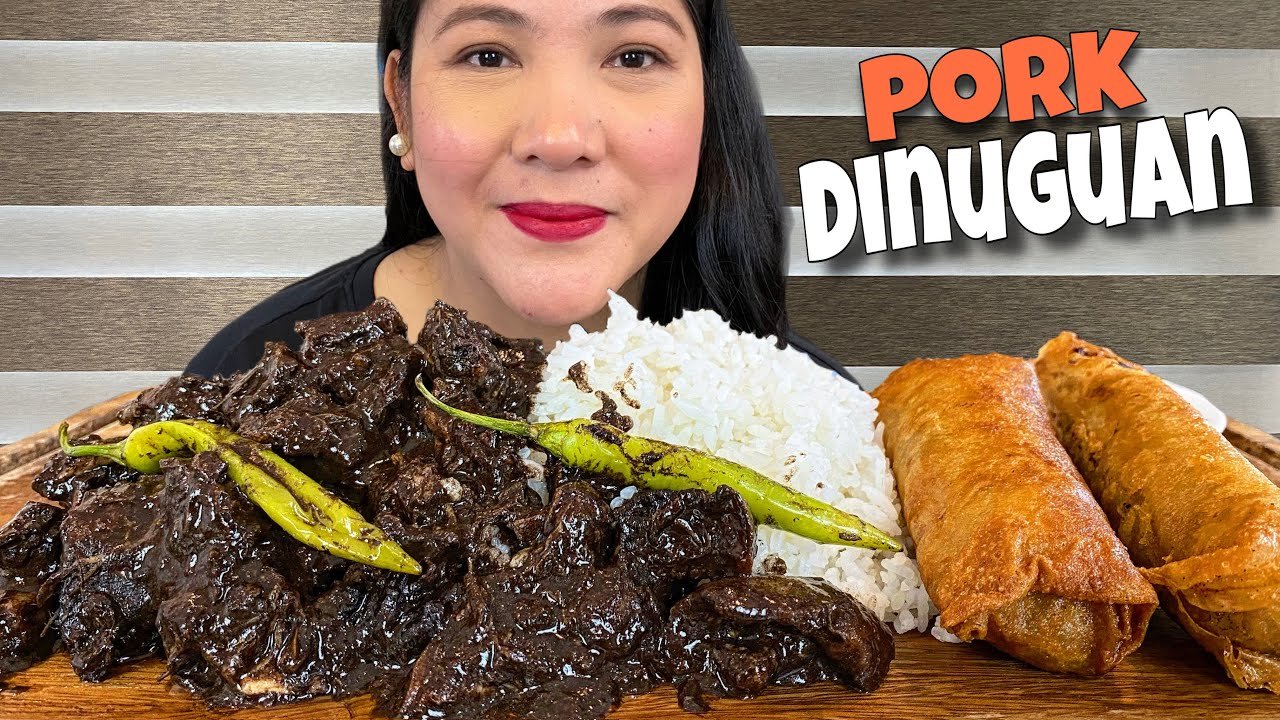
Pork Dinuguan
Ingredients
Method
- Heat the oil in a kaldero over medium heat. Saute the garlic, onion and ginger for 2 to 3 minutes until soft and fragrant.
- Add the pork and cook for 8 to 10 minutes, stirring, until lightly browned. Season with fish sauce and cook for 1 minute more.
- Pour in the vinegar and let it boil for 3 to 5 minutes without stirring.
- Add the water and bay leaves. Cover and simmer over low heat for 35 to 40 minutes until the pork is tender, adding a little water if it dries out.
- Lower the heat. Pour in the pork blood in a thin stream while stirring constantly, and keep stirring for 5 to 10 minutes until the sauce thickens and turns dark.
- Add the sugar and siling haba and simmer for 5 minutes more. Season with salt and pepper and serve hot with rice or puto.
Video
Tips
- Buy fresh blood from a trusted source. Ask your suki at the wet market for fresh pork blood and keep it cold until you cook. Some sellers mix in a little vinegar to keep it from clotting.
- Mash or strain the blood. If the blood has started to clump, mash it with gloved hands or pass it through a sieve before adding it to the pot.
- Do not stir right after adding vinegar. Let the vinegar boil for a few minutes untouched to cook off the harsh raw taste, a common Filipino cooking habit.
- Add the blood slowly over low heat. Pour it in a thin stream while stirring constantly. High heat can make the sauce grainy.
- Keep stirring until it thickens. Stir for the first 5 to 10 minutes after adding the blood so it cooks evenly and does not stick to the pot.
- Cut the pork small. Bite-size cubes cook faster and soak up more sauce. A sharp knife makes this easier, especially with pork skin.
- Taste at the end. Adjust with fish sauce, salt or a pinch of sugar once the sauce has reduced.
What to serve with it
The classic partner is puto, the soft steamed rice cake, which turns dinuguan into a well-loved merienda. For lunch or dinner, serve it with steamed white rice. A crunchy topping of chicharon or sliced lechon kawali adds contrast. Pickled atchara or a simple tomato and onion salad on the side helps cut the richness.
Storing and reheating
Cool leftovers within 2 hours and refrigerate in a covered container for up to 3 days. Dinuguan thickens in the fridge, so add a few tablespoons of water when reheating. Warm it in a pot over low heat, stirring gently until it simmers all the way through. It also freezes well for up to 2 months; thaw it overnight in the fridge before reheating. Many people say dinuguan tastes even better the next day.
Quick answers
- What does dinuguan taste like? Savory and slightly sour, with a rich, earthy flavor. The blood itself has a mild taste once cooked.
- Can I use packaged pork blood? Some markets sell ready-mixed blood. Fresh blood gives the smoothest sauce, but packaged blood works if you follow the label and keep it cold.
- Why did my sauce turn grainy? The heat was too high or the blood was added too fast. Next time, lower the heat and stir constantly as you pour.
- Which pork cut is best? Pork belly or kasim works well. Add some offal if you like a more traditional texture.
- How sour should it be? Just enough to balance the richness. Start with half a cup of vinegar for 750 g of pork and adjust next time to your taste.