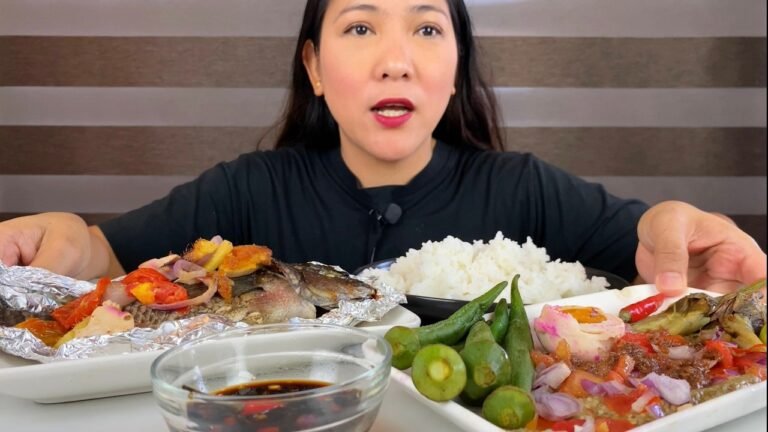
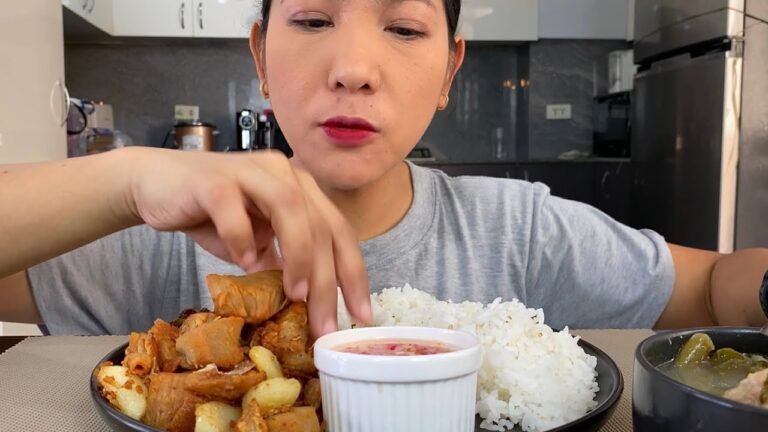
Few snacks are as Filipino as mangga hilaw at bagoong: crisp, sour green mango dipped in salty, savory shrimp paste. The sharp sourness of the fruit and the rich umami of the bagoong wake up your whole mouth, and adding chilies makes it even harder to stop. Green mango with a special spicy shrimp paste is featured on the BIOCO Food Trip YouTube channel, and it is one of the most loved merienda on the channel.

This guide shows you how to pick good green mangoes, how to cut them, and how to make a spicy sauteed bagoong alamang at home that is far better than eating it straight from the jar.
About the dish
Green mango, or mangga hilaw, is the unripe form of the Philippine carabao mango. It is firm, crunchy and very sour, sometimes with a slight bitterness near the skin. Filipinos enjoy it as a snack throughout the year, but it is especially popular in the hot months and during mango season. Street vendors sell sliced green mango in plastic cups or on sticks with a small scoop of bagoong.
Bagoong alamang is a fermented paste made from tiny shrimp or krill and salt. Raw, it is very salty and pungent. Sauteed bagoong, often labeled as sweet or spicy, is cooked with garlic, onion, sugar, vinegar and sometimes pork fat, which mellows the funk and adds sweetness. The spicy version adds siling labuyo or chili flakes. The result is a thick, glossy, sweet-salty-spicy paste that clings to the mango.
Many families also make an ensaladang mangga with diced green mango, tomatoes and onions tossed with bagoong, which is a popular side dish for fried fish and grilled meats.
Because the sauce is sauteed, a single batch lasts for weeks in the fridge. That makes it easy to keep a jar ready for whenever you find good green mangoes at the market.

Green Mango with Spicy Bagoong
Ingredients
Method
- Heat the oil in a pan over medium heat. Saute the garlic for 1 minute, then add the onion and tomato and cook for 3 to 4 minutes until soft.
- Add the bagoong alamang and stir well. Lower the heat and cook for 5 minutes, stirring often.
- Stir in the brown sugar and vinegar. Do not stir for 1 minute to let the vinegar cook, then mix well.
- Add the siling labuyo and chili flakes. Cook for 5 to 7 minutes more, stirring often, until thick and glossy. Taste and adjust the sugar.
- Let cool completely before transferring to a clean jar.
- Wash and dry the mangoes. Slice off the cheeks on either side of the seed.
- Score the flesh into strips or cubes, or peel and slice into long wedges.
- Serve the cold mango with the spicy bagoong for dipping.
Video
Tips
- Pick firm, heavy mangoes. Choose green mangoes that feel hard and heavy for their size, with smooth, unblemished skin. Softer ones are starting to ripen and will be less sour.
- Use a sharp knife. Green mango is very firm. A sharp knife gives clean slices and is safer than a dull one that can slip.
- Chill the mango. Cold mango is crunchier and more refreshing. Keep it in the fridge for an hour before slicing.
- Cook the bagoong slowly. Saute over low to medium heat and stir often. Bagoong has sugar in it and can scorch quickly.
- Balance sweet, salty and sour. Taste as you go. Add more sugar if it is too salty, or a splash of vinegar if it is too sweet.
- Adjust the heat. Start with a few chopped siling labuyo, taste after cooking, and stir in more if you like it spicier.
- Ventilate the kitchen. Sauteing bagoong is very aromatic. Open a window or turn on the range hood.
What to serve with it
Green mango with bagoong is a snack on its own, often shared at home or with friends in the afternoon. The same spicy bagoong is excellent with other sour fruits such as kamias, singkamas, santol and green guava. It also works as a condiment for kare-kare, binagoongan, pinakbet and grilled pork. For a side dish, toss diced green mango, tomatoes and red onion with a spoonful of the bagoong to make ensaladang mangga.
Storing and reheating
Store cooked bagoong in a clean, airtight glass jar in the fridge for up to 1 month. Always use a clean, dry spoon to scoop it out so it lasts longer. It does not need reheating; bring it to room temperature or warm a small portion in a pan for a minute if it has firmed up. Sliced green mango is best eaten within a few hours, as it starts to brown. Keep whole green mangoes at room temperature for a few days or in the fridge for up to 1 week to slow ripening.
Quick answers
- What is the difference between bagoong alamang and bagoong isda? Alamang is made from tiny shrimp, while bagoong isda is made from fish such as anchovies and is usually more liquid.
- Is store-bought sauteed bagoong okay? Yes. You can still improve it by sauteing it with extra garlic, chili and a little sugar.
- Can I make it without pork? Yes. This recipe uses only cooking oil, which keeps it simple.
- Why is my bagoong too salty? Raw bagoong varies in saltiness. Add more sugar and a splash of vinegar, or mix in a little water and cook it down again.
- What other fruits go with bagoong? Kamias, singkamas, santol, green guava and unripe papaya are all popular.