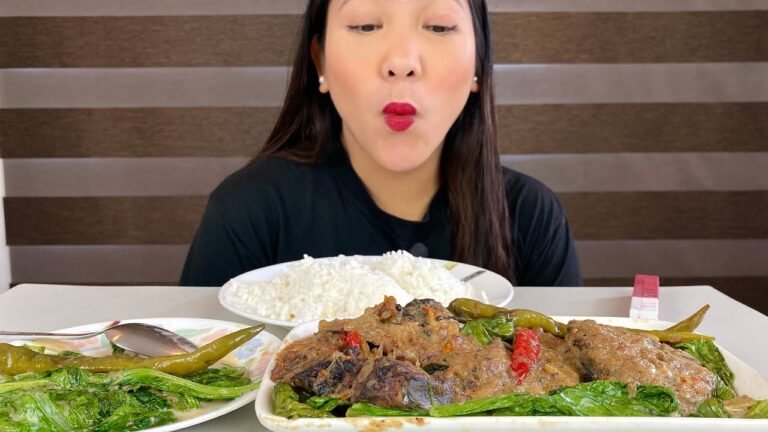
Chicken and pork adobo is Filipino home cooking at its most familiar: meat braised in vinegar, soy sauce, garlic, bay leaves, and black pepper until the sauce turns dark and glossy. This plate is featured on the BIOCO Food Trip YouTube channel.

Using both meats is common at home. The chicken stays juicy while the pork adds richness, and both soak up the sauce.
What makes adobo adobo
Adobo is less a single recipe than a method: braising in vinegar with garlic and salt. Soy sauce, bay leaves (laurel), and whole peppercorns are the most common additions today. The vinegar also helps the dish keep well, which is part of why adobo often tastes even better the next day.
- Vinegar gives the tang. Cane vinegar and coconut vinegar are common choices.
- Soy sauce adds saltiness and the dark color.
- Garlic, bay leaves, and black peppercorns give the aroma.
How it is usually cooked (general method)
This is a general home method, not the exact recipe from the video. Households adjust the vinegar and soy sauce to their own taste.
- Chicken pieces (thighs and drumsticks hold up well)
- Pork belly or kasim, cut into cubes
- Vinegar
- Soy sauce
- Garlic, crushed
- Bay leaves
- Whole black peppercorns
- Water
- Cooking oil (optional, for browning)
Put the meat, garlic, soy sauce, vinegar, bay leaves, peppercorns, and a little water in a pot. Bring to a boil and let it bubble for a few minutes without stirring so the vinegar mellows. Lower the heat, cover, and simmer until the pork is tender. The chicken cooks faster, so some cooks add it later. Uncover and reduce the sauce until it coats the meat. For extra flavor, lift the meat out, brown it in a little oil, and return it to the sauce.
Tips
- Do not stir right after adding the vinegar. Letting it boil first softens the sharp taste.
- Pork takes longer than chicken. Start the pork first or cut it smaller.
- Choose your sauce style: reduce it until thick for a drier adobo, or keep more liquid to spoon over rice.
- Adobo keeps well in the fridge, and the flavor deepens overnight.